


For many women, the days leading up to menstruation bring a mix of physical and emotional challenges — bloating, cramps, fatigue, irritability, mood swings, or food cravings. While modern medicine often frames PMS (premenstrual syndrome) as an unavoidable nuisance to be “managed” with painkillers or hormonal treatments, Ayurveda offers a more holistic perspective.
In Ayurveda, menstruation is seen as a natural cleansing process — a rhythmic cycle that, when balanced, should occur with minimal discomfort. PMS is not inevitable but a sign of imbalance in the doshas, agni (digestive fire), or dhatus (tissues).
This blog explores how to approach Ayurvedic remedies for PMS, blending ancient wisdom with modern science. You’ll learn how Ayurveda views menstrual health, how imbalances manifest as PMS symptoms, and practical diet, lifestyle, and self-care practices to restore balance naturally.
Ayurvedic Understanding of Menstruation
Ayurveda describes menstruation as artava dharma — the cyclical release of artava (the female reproductive tissue). A healthy menstrual cycle reflects balance in the doshas, strength of agni, clarity of srotas (channels), and vitality of ojas (immunity and resilience).
- Vata governs movement — the downward flow (apana vayu) that expels menstrual blood. When aggravated, it causes cramps, irregular cycles, and anxiety.
- Pitta governs heat and transformation — influencing hormones, metabolism, and blood. When aggravated, it leads to heavy bleeding, irritability, and inflammation.
- Kapha governs stability and nourishment — providing tissue support. When aggravated, it causes bloating, breast tenderness, and sluggishness.
From this perspective, PMS is not a “disease” but a manifestation of doshic imbalance. By restoring balance through food, herbs, daily routines, and stress management, women can experience smoother cycles with less discomfort.
Modern Science Meets Ayurveda
Modern medicine acknowledges PMS as a constellation of symptoms driven by hormonal fluctuations, particularly estrogen and progesterone changes, along with neurotransmitter imbalances. Inflammation, stress, and gut dysbiosis also play significant roles.
Interestingly, research supports Ayurvedic herbs and practices:
- A 2019 systematic review in Complementary Therapies in Medicine found that Ashwagandha supplementation significantly reduced stress and improved quality of life, supporting its role in PMS management.
- A 2021 randomized controlled trial in the Journal of Ayurveda and Integrative Medicine showed that Triphala and Dashamoola improved menstrual regularity and reduced PMS-related pain and fatigue.
Both ancient Ayurveda and modern science agree: PMS reflects systemic imbalance, and natural remedies can help restore harmony.
Types of PMS in Ayurvedic Terms
Ayurveda categorizes PMS symptoms according to which dosha is aggravated:
- Vata-type PMS: Anxiety, insomnia, irregular cycles, lower back pain, cramps, constipation, dry skin.
- Pitta-type PMS: Irritability, anger, acne, headaches, heavy bleeding, loose stools, hot flashes.
- Kapha-type PMS: Bloating, water retention, breast tenderness, lethargy, weight gain, sugar cravings.
Most women experience a combination, but usually one dosha predominates. Identifying your type helps in applying the right Ayurvedic remedies for PMS.
Ayurvedic Diet Tips for PMS Relief
General Guidelines
- Eat warm, cooked, and easily digestible foods.
- Favor seasonal vegetables, whole grains, and healthy fats like ghee or sesame oil.
- Reduce processed foods, refined sugar, fried items, and excess caffeine.
- Keep mealtimes regular to support agni.
Diet by Dosha Imbalance
For Vata PMS
- Favor grounding, oily foods: root vegetables, soups, ghee, warm milk with nutmeg.
Avoid raw salads, dry snacks, and cold drinks. - Herbs: Ashwagandha, dashamoola, hingvastak churna.
For Pitta PMS
- Favor cooling foods: cucumber, coconut water, sweet fruits, leafy greens, coriander.
- Avoid chili, coffee, alcohol, and fried foods.
- Herbs: Aloe vera, shatavari, coriander seeds.
For Kapha PMS
- Favor light, spiced foods: barley, millet, steamed greens, ginger tea.
- Avoid dairy, sweets, and overeating.
- Herbs: Trikatu (ginger, black pepper, long pepper), turmeric.
Ayurvedic Herbs for PMS
Ayurveda’s herbal pharmacy offers many supportive remedies:
- Shatavari (Asparagus racemosus): Nourishes reproductive tissues, balances hormones, and reduces PMS irritability.
- Ashwagandha (Withania somnifera): Adaptogen that reduces stress, anxiety, and fatigue.
- Triphala: Improves elimination and detoxifies the gut, reducing bloating and sluggishness.
- Turmeric (Curcuma longa): Anti-inflammatory, supports liver detoxification, and eases cramps.
- Guduchi (Tinospora cordifolia): Boosts immunity, reduces inflammation, and balances hormones.
- Dashamoola: A classical formula of 10 roots, used for reducing vata-related cramps and pain.
These herbs can be taken as teas, powders, or supplements, ideally under guidance from an Ayurvedic practitioner.
Self-Care Practices for Menstrual Balance
1. Abhyanga (Self-Oil Massage)
Warm sesame oil (vata), coconut oil (pitta), or mustard oil (kapha) massaged into the body calms nerves, improves circulation, and reduces cramps.
2. Yoga for PMS
- Vata: Restorative poses like child’s pose, supported savasana.
- Pitta: Cooling forward bends and gentle twists.
- Kapha: Dynamic sun salutations and energizing flows.
3. Pranayama & Meditation
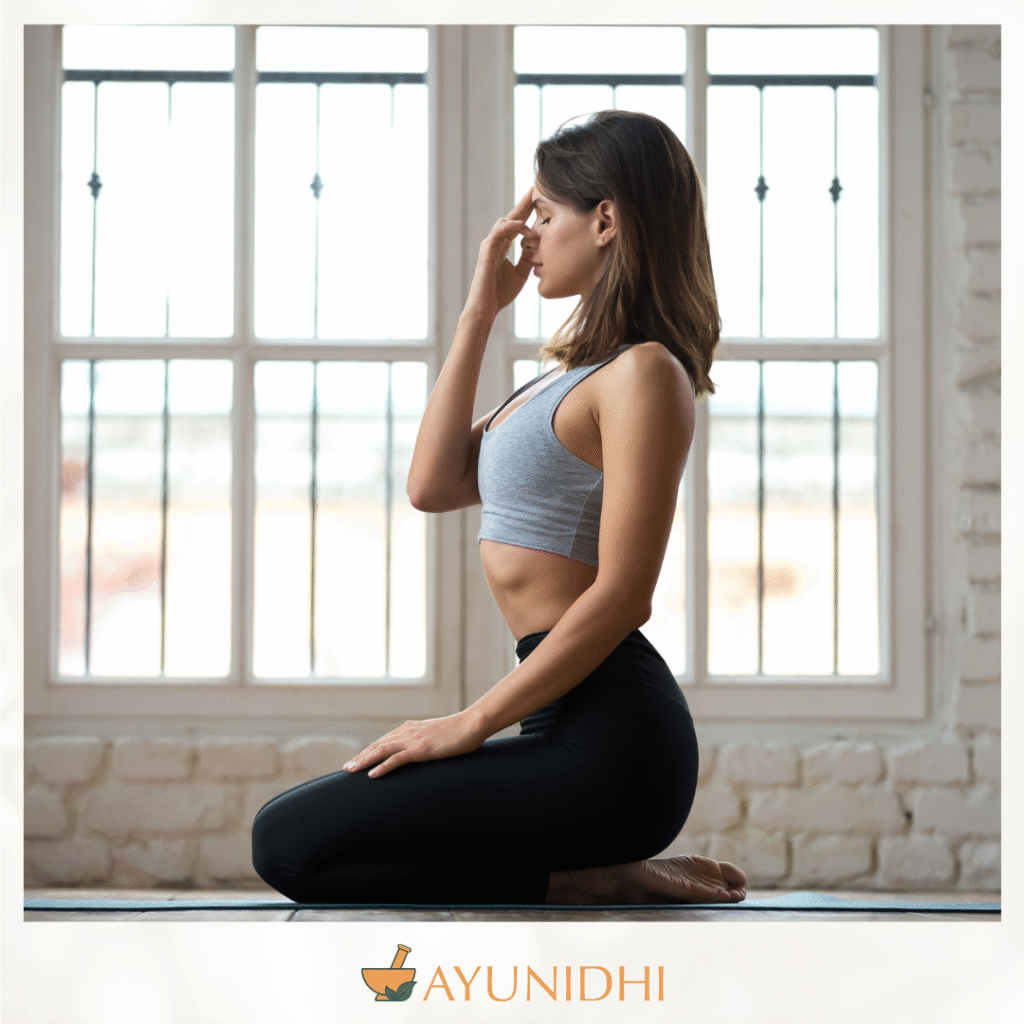
- Nadi shodhana (alternate nostril breathing) balances emotions.
- Sheetali (cooling breath) calms pitta irritability.
- Meditation and yoga nidra reduce stress and improve hormonal regulation.
4. Heat Therapy
Applying a warm compress or hot water bottle to the lower abdomen reduces vata cramps.
5. Rest and Rhythm
Ayurveda emphasizes syncing with natural cycles. Rest during menstruation, keep sleep regular, and avoid overexertion.
Lifestyle Tips for PMS Relief
- Reduce Stress: Chronic stress aggravates vata and pitta. Incorporate daily mindfulness, journaling, or gentle movement.
- Stay Active: Regular yoga, walking, or swimming helps balance kapha stagnation.
- Hydrate: Warm herbal teas (ginger, cinnamon, coriander) soothe digestion and reduce bloating.
- Digital Detox: Reduce screen time before bed to improve sleep and hormonal balance.
- Cycle Tracking: Monitor your symptoms to understand dosha patterns and plan remedies accordingly.
Sample PMS Self-Care Routine
- Morning: Warm lemon water, gentle yoga stretches, alternate nostril breathing.
- Breakfast: Spiced oatmeal with ghee (vata), fresh fruit (pitta), or millet porridge with ginger (kapha).
- Midday: Largest meal with grains, vegetables, legumes, and digestive spices.
- Afternoon: Herbal tea such as chamomile, ginger, or coriander. Short mindful walk.
- Evening: Light dinner, abhyanga massage, restorative yoga.
- Night: Warm nutmeg milk (vata/pitta) or ginger tea (kapha). Sleep by 10 p.m.
The Power of Ayurvedic Remedies for PMS
PMS does not have to be an inevitable monthly struggle. Ayurveda teaches that menstrual discomfort is a signal of imbalance, not a normal condition to endure. By understanding your constitution, honoring your body’s rhythms, and using diet, herbs, and self-care practices, you can restore balance and experience smoother cycles.
Modern science increasingly supports this holistic view — linking stress, inflammation, and gut health with PMS, and confirming the benefits of Ayurvedic herbs like ashwagandha, shatavari, and triphala.
Ultimately, the goal of Ayurvedic remedies for PMS is not only symptom relief but deeper connection with your body’s natural wisdom. When you honor your cycle with compassion and balance, menstruation becomes not a burden but a vital expression of health, rhythm, and renewal.