


Hormonal shifts — whether monthly (PMS) or life-stage (menopause) — bring physical, emotional, and energetic challenges. Cramps, mood swings, hot flashes, fatigue, insomnia, and low libido are just some of the symptoms that women often accept as inevitable. But within the traditions of yoga and holistic wisdom lies a gentler, deeper path: yoga for hormonal balance.
Let’s step into a practice that doesn’t just “manage symptoms,” but addresses root balance — for body, mind, and spirit.
Understanding Hormonal Imbalance from Ayurvedic & Biomedical Lens
Ayurvedic Perspective on Hormones & Cycles
In Ayurveda, the menstrual and menopausal cycles are governed by the interplay of doshas (vata, pitta, kapha), agni (digestive/metabolic fire), ojas (vital essence), and srotas (subtle channels). When these are in harmony, hormonal rhythms operate gracefully; when disturbed, imbalance manifests as menstrual discomfort or menopausal symptoms.
- Vata dominance often correlates with irregular cycles, dryness, erratic cycles, and anxiety.
- Pitta imbalance may manifest as heavy flow, irritation, heat, acne, hormone-driven swings.
- Kapha excess often shows as sluggishness, weight gain, brain fog, or decreased libido.
Ayurveda describes menopause (called Ritu Sandhi) as a transition in which reproductive energy shifts — the body must reorient its resources. Supporting this transition with gentle, discerning practices helps reduce the “shock” of hormonal descent.
Modern Biomedical Insights
Modern endocrinology views hormonal balance through the hypothalamic-pituitary-gonadal axis (HPG), the interplay of estrogen, progesterone, FSH, LH, cortisol, thyroid hormones, and adrenal function. Dysregulation — through stress, inflammation, gut dysbiosis, or metabolic imbalance — can ripple into menstrual and menopausal disturbances.
Studies show that yoga and pranayama can modulate the autonomic nervous system, reduce cortisol, influence endocrine signaling, and support metabolic regulation. A review titled Role of yoga in hormonal homeostasis describes how integrated yoga practices can influence cortisol, thyroid, pituitary hormones, and melatonin.
Another trial in menopausal women found that Hatha yoga led to reductions in FSH and LH, and increases in estradiol and progesterone — hormones central to the menopausal transition.
Thus, both Ayurvedic insight and empirical science converge: yoga for hormonal balance is not just holistic rhetoric — it has measurable physiological effects.
Mechanisms: How Yoga & Pranayama Influence the Endocrine System
Understanding mechanisms deepens trust in practice. Some of the key pathways include:
- Autonomic modulation: Yoga and breath practices activate the parasympathetic nervous system (rest-and-digest), reducing sympathetic drive. This helps calm adrenal cortisol output, which often interferes with reproductive hormones.
- Vagal tone and brain-gut axis: Breath control stimulates the vagus nerve, connecting brain, gut, and hormonal feedback loops.
- Hypothalamic regulation: Breath and movement influence hypothalamic centers governing hormone release (e.g. GnRH, CRH).
- Improved circulation to endocrine organs: Inversions, twists, and gentle pressure help blood flow to ovaries, adrenals, and thyroid, nourishing endocrine function.
- Anti-inflammatory and antioxidant benefits: Regular practice reduces systemic inflammation, oxidative stress — both known to disrupt hormone receptors.
A narrative review Effects of yogic breath regulation collates evidence that pranayama (slow, rhythmic breathing) can reduce stress markers, improve heart rate variability, and support endocrine balance.
Hence, the synergy of asana + pranayama offers a multi-layered route to restoring hormonal rhythm.
Yoga Poses for PMS & Hormonal Balance
Below are yoga postures (asanas) known to support hormonal health. Use them mindfully — adapt based on your energy, cycle phase (if menstruating), and constitutional balance.
Foundational Notes
- Avoid deep inversion or strong abdominal compression during heavy flow menstruation (if that’s contra for you).
- Always tune into your body; if a pose causes discomfort, modify or skip.
- Combine with breath awareness and mindfulness.
Recommended Asanas
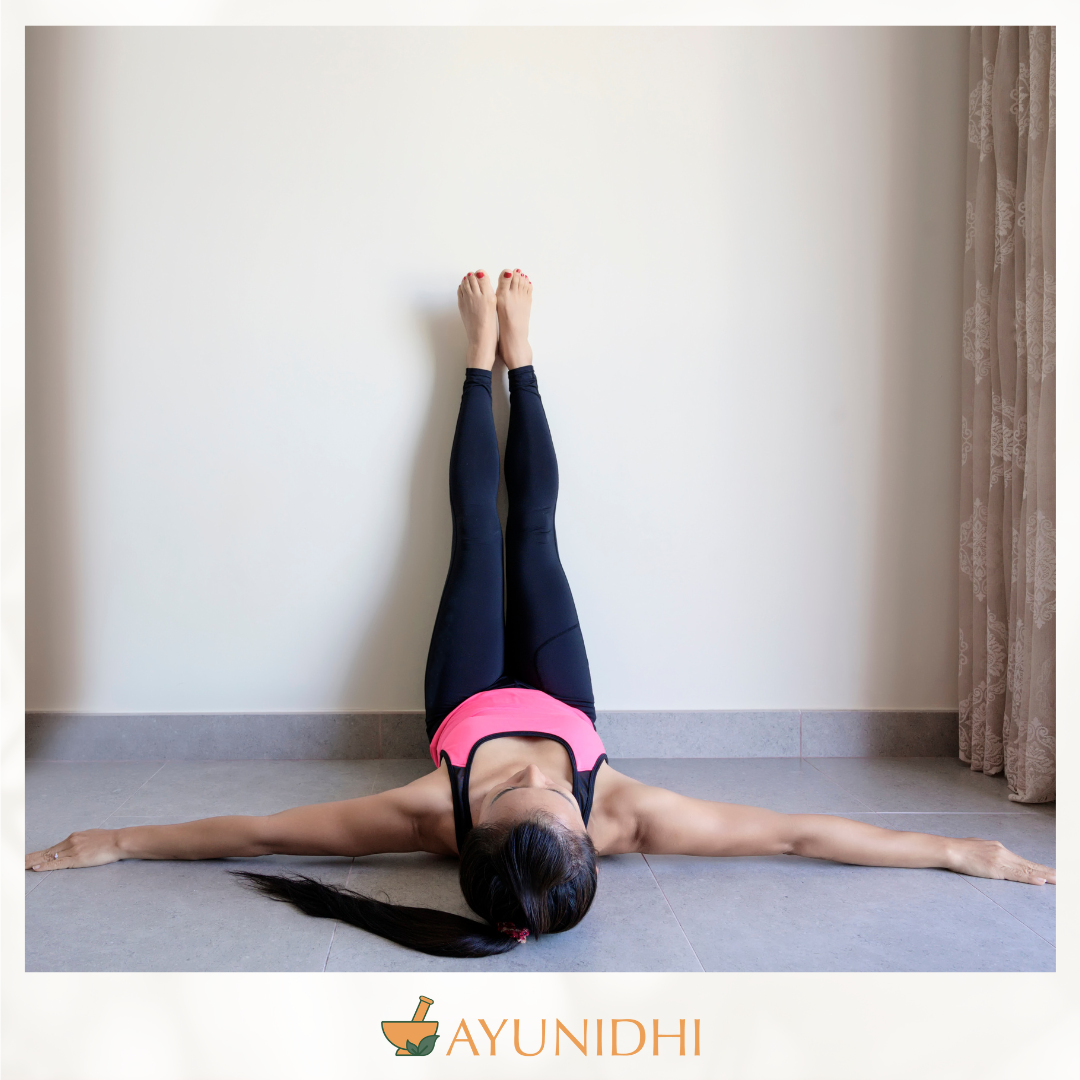
- Viparita Karani (Legs Up the Wall Pose)
Gentle inversion that helps drain venous congestion in the pelvic region, calm the nervous system, and support ovarian circulation. - Setu Bandha Sarvangasana (Bridge Pose)
Activates the thyroid, opens the heart and pelvis — beneficial especially in postpartum or menopause. - Supta Baddha Konasana (Reclined Bound Angle Pose)
Opens the pelvic floor, reduces tension in the lower back, and supports uterine relaxation. - Balasana (Child’s Pose)
Allows surrender, relief, and grounding, especially helpful when cramps or emotional overwhelm arise. - Jathara Parivartanasana (Supine Twist)
Massages the abdominal organs, supports detoxification, and encourages rhythmic flow in the srotas. - Bhujangasana (Cobra Pose)
Gentle backbend that stimulates adrenal energy and opens the front line (helpful in mid-cycle or menopause). - Trikonasana (Triangle Pose)
Supports side-body expansion and gentle stretch in the pelvic organs, enhancing circulation. - Anjaneyasana (Low Lunge)
A lunging posture that lengthens the psoas region and offers energetic lift.
Some yoga teachers recommend sequencing: start with grounding forward folds, move into mild backbends or twists, and finish in relaxing inversions + restorative poses.

Pranayama & Breath Techniques for Hormonal Support
Breathwork (pranayama) is one of the most potent tools for yoga for hormonal balance, especially because it’s accessible, calming, and can be practiced anywhere. Below are effective techniques:
- Nadi Shodhana (Alternate Nostril Breathing): Balances left/right hemispheres, calms the mind, and supports autonomic balance.
- Chandra Bhedana (Left-nostril Breath): Cooling, calming, beneficial for pitta-type symptoms and hot flashes.
- Sheetali / Sheetkari (Cooling Breath Techniques): Useful in hot flushes and pitta imbalances.
- Ujjayi (Victorious Breath): Gentle constriction of the throat, steadying and calming, supportive in maintains equilibrium.
- Bhramari (Bee Breath): Excellent for calming agitation, anxiety, and inner turbulence during PMS or menopause.
In the context of menstrual and menopausal health, the review Harmonizing the menstrual cycle: A review on pranayama practice notes that pranayama offers psychophysiological support, mood stabilization, and symptom mitigation.
Structuring a Hormonal Balance Practice
To integrate yoga for hormonal balance, here’s a suggested framework:
- Begin with grounding & centering
Quiet breath, observation, gentle stretching. - Warm-up & gentle flow
Gentle movements, sun salutations, mindful transitions. - Focused hormone-supportive asanas
Use the poses listed above, adapting for phase and constitution. - Pranayama + meditation
5–15 minutes of chosen breath technique, followed by meditation or visualization. - Restorative/Relaxation
Viparita Karani, Savasana, yoga nidra to integrate and calm.
Practice 3–5 times per week if possible; even shorter daily sessions help. Over time, your body tunes to rhythm, and hormonal balance becomes more stable.
Lifestyle & Self-Care to Enhance Hormonal Balance
Yoga and pranayama are powerful, but they amplify when supported by self-care. Here are complementary practices:
- Sleep & Circadian Rhythm: Aim to sleep by 10 p.m. and rise before sunrise.
- Diet Aligned with Hormonal Needs: Favor whole, seasonal foods. In PMS phase, lean toward warm, lightly spiced foods; in menopause phase, include phytoestrogens like flax, fenugreek, or sesame (if suitable).
- Stress Management: Journaling, nature time, mindful pauses reduce cortisol, which interferes with reproductive hormones.
- Abhyanga (Self-Massage): Warm oil massage on the lower back and pelvic region enhances circulation and nervous regulation.
- Hydration & Herbal Teas: Use gentle herbs such as ashwagandha, shatavari, licorice, or tulsi (suitable to your constitution).
- Movement & Walking: Gentle movement supports circulation, lymph, and hormonal flow — but avoid overexertion during sensitive phases.
Modifications, Cautions & Best Practices
- During heavy menstruation: avoid deep inversions or strong compressions. Gentle restorative poses are best.
- During hot flushes: favor cooling pranayama (sheetali, sheetkari) and restorative practices.
- For women with high blood pressure, glaucoma, or eye issues: avoid strong inversions (Salamba Sirsasana, Sarvangasana) without supervision.
- If on hormone replacement or medications: always get medical clearance and inform your instructor.
- Do not force or strain: yoga is about listening to your body, not pushing it.
Cultivating Hormonal Harmony Through Yoga
Hormones are not rogue enemies — they are messengers, delicate and dynamic. A practice rooted in yoga for hormonal balance invites you to reconnect with your inner intelligence, offering a graceful path through PMS and menopause.
Through mindful movement, sustained breath, and supportive self-care, you restore balance from within. Over time, symptoms fade, moods stabilize, cycles smooth, and the transition into menopausal life becomes less of an upheaval and more of a natural unfolding.
Ready to bring your hormones — and your life — back into balance?
At AyuNidhi, we offer personalized Ayurvedic and yoga-based guidance to help women navigate PMS, perimenopause, and menopause with ease and confidence. Discover how simple, consistent practices can restore harmony to your body and mind.