


Hormonal shifts, whether monthly (PMS) or life-stage (perimenopause and menopause), bring physical, emotional and energetic challenges. Cramps, mood swings, hot flashes, fatigue, poor sleep and low libido are symptoms many women have learned to accept as inevitable. Yoga and Ayurveda offer a gentler path: practices that work with your nervous system and daily rhythms to support hormonal balance, alongside your medical care.
This isn’t about “fixing” your hormones with a few poses. It’s about creating the conditions (calmer stress response, steadier sleep, better digestion) in which your body can move through these transitions with less friction.
Understanding Hormonal Balance: Ayurvedic and Biomedical Views
The Ayurvedic Perspective on Hormones and Cycles
In Ayurveda, the menstrual and menopausal cycles are shaped by the interplay of the doshas (Vata, Pitta, Kapha), agni (digestive and metabolic fire), ojas (vital essence) and srotas (the body’s channels). When these are in harmony, cycles tend to flow more smoothly. When they’re disturbed, imbalance can show up as menstrual discomfort or a harder menopausal transition.
- Vata imbalance often shows up as irregular cycles, dryness, cramping, anxiety and poor sleep.
- Pitta imbalance may appear as heavy flow, irritability, heat, acne or hot flashes.
- Kapha imbalance can show up as sluggishness, water retention, weight gain, brain fog or low libido.
Ayurveda calls menopause Rajonivritti, the natural cessation of menstruation. It’s a transition in which the body reorients its resources, and it typically unfolds during the Vata stage of life. Supporting it with grounding, nourishing practices can make the shift feel less abrupt.
The Biomedical View
Modern endocrinology describes hormonal balance through the hypothalamic-pituitary-ovarian axis: the interplay of estrogen, progesterone, FSH and LH, plus cortisol, thyroid hormones and adrenal function. Chronic stress, poor sleep, inflammation and metabolic changes can all affect how women experience their cycles and the menopausal transition.
What the research supports is more modest than wellness headlines suggest, but encouraging:
- A systematic review and meta-analysis of 13 randomized trials found that yoga reduced menopausal symptoms overall, including psychological symptoms, compared with no treatment, though the authors rated the evidence quality as low (Cramer et al., Maturitas, 2018).
- A narrative review of yogic breathing found that slow, rhythmic pranayama can reduce markers of stress and improve heart-rate variability, a measure of nervous-system flexibility (Journal of Ayurveda and Integrative Medicine).
The honest summary: yoga and breathwork reliably help the stress, sleep and mood side of hormonal transitions. Evidence that they directly change hormone levels is still limited. That’s still meaningful, because stress and poor sleep amplify almost every hormonal symptom.
How Yoga and Pranayama Support the Endocrine System
- Calming the stress response. Slow breathing and restorative poses shift the nervous system toward rest-and-digest, which can lower the stress load that worsens PMS and menopausal symptoms.
- Vagal tone and the gut-brain connection. Slow exhale-focused breathing engages the vagus nerve, which links the brain, gut and stress-response systems.
- Better sleep. Evening restorative practice and breathwork support sleep, which in turn steadies mood, appetite and energy.
- Circulation and tension release. Gentle twists, hip openers and supported inversions ease pelvic and lower-back tension and support circulation.
Yoga Poses for PMS and Hormonal Balance
Use these mindfully, adapting to your energy, your cycle phase and your constitution.
Foundational notes
- During heavy menstrual flow, skip strong inversions and deep abdominal compression if they don’t feel right for you.
- If a pose causes discomfort, modify or skip it.
- Pair every pose with slow breathing and awareness.
Recommended asanas
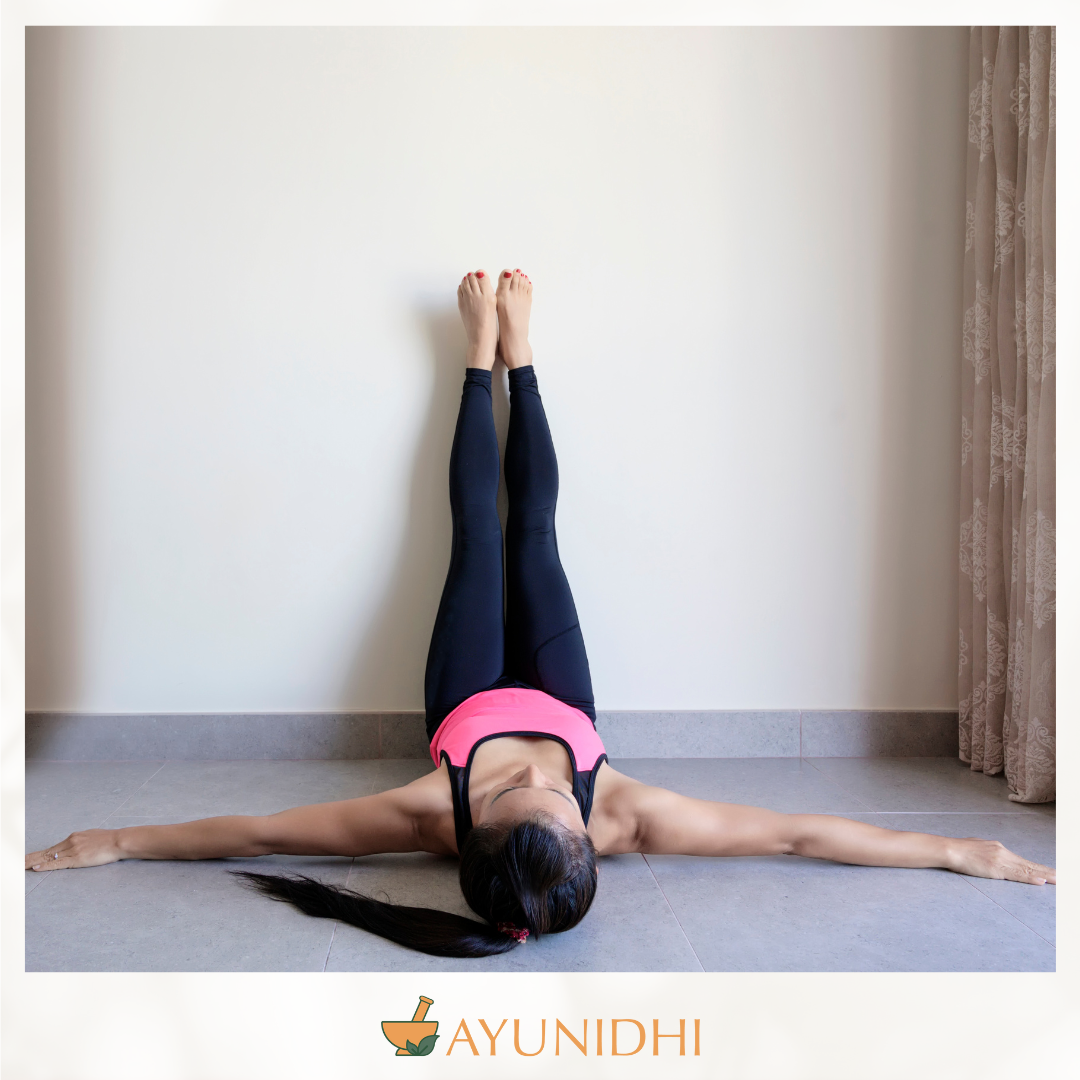
- Viparita Karani (Legs-Up-the-Wall): a gentle supported inversion that calms the nervous system and eases heavy, tired legs and a tight lower back.
- Setu Bandha Sarvangasana (Supported Bridge): opens the chest and front of the hips; with a block under the sacrum, it becomes deeply restful.
- Supta Baddha Konasana (Reclined Bound Angle): softens the hips and pelvic area, and eases lower-back tension.
- Balasana (Child’s Pose): grounding and soothing, especially when cramps or emotional overwhelm arise.
- Jathara Parivartanasana (Supine Twist): releases the spine and abdomen, and can ease bloating and tension.
- Bhujangasana (Cobra): a gentle backbend that opens the front body and lifts energy.
- Trikonasana (Triangle): lengthens the side body and opens the hips.
- Anjaneyasana (Low Lunge): stretches the hip flexors and psoas, and offers an energetic lift.
A simple sequence: start with grounding forward folds, move into mild backbends or twists, and finish with supported inversions and restorative poses.

Pranayama and Breath Techniques for Hormonal Support
Breathwork is one of the most accessible tools for hormonal balance: calming, portable and practicable anywhere.
- Nadi Shodhana (alternate nostril breathing): calms the mind and supports nervous-system balance.
- Chandra Bhedana (left-nostril breathing): cooling and calming; helpful for Pitta-type symptoms and hot flashes.
- Sheetali or Sheetkari (cooling breath): useful during hot flashes and Pitta imbalance.
- Ujjayi (victorious breath): a gentle throat constriction that steadies and calms.
- Bhramari (bee breath): soothes agitation and anxiety during PMS or menopause.
A review on pranayama and the menstrual cycle describes breathwork as a supportive tool for mood and symptom relief (International Journal of Yoga and Allied Sciences).
Structuring a Hormonal Balance Practice
- Ground and center: quiet breath, observation and gentle stretching.
- Warm up: gentle movement, or slow sun salutations.
- Focused asanas: the poses above, adapted to your phase and constitution.
- Pranayama and meditation: 5–15 minutes of your chosen breath technique, then stillness.
- Restore: Legs-Up-the-Wall, Savasana or yoga nidra.
Practice three to five times a week if you can; even short daily sessions count. Consistency matters more than length.
Lifestyle and Self-Care to Support Hormonal Balance
- Sleep and circadian rhythm: aim for a regular bedtime around 10 p.m. and a consistent wake time.
- Food: favor whole, seasonal, warm meals. Before your period, lean toward warm, lightly spiced foods. During perimenopause and menopause, foods like flax and sesame can be part of a balanced diet.
- Stress management: journaling, time in nature and mindful pauses lower your daily stress load.
- Abhyanga (self-massage): warm oil on the lower back, belly and feet is grounding, especially for Vata.
- Movement: daily walking and gentle strength work support energy, bones and mood; avoid overexertion when you’re depleted.
- Herbs, with guidance: Ayurveda uses herbs such as shatavari, ashwagandha, tulsi and licorice for women’s health, but they aren’t one-size-fits-all. Licorice can raise blood pressure, ashwagandha can affect thyroid levels, and some herbs may not be appropriate if you’re on hormone therapy, have a history of hormone-sensitive cancer, or are pregnant. Talk to your doctor or a qualified practitioner before starting any herb.
Modifications, Cautions and When to See Your Doctor
- Heavy menstruation: avoid strong inversions or compression; restorative poses are best.
- Hot flashes: favor cooling pranayama and restorative practice.
- High blood pressure, glaucoma or eye conditions: avoid strong inversions (headstand, shoulder stand) without supervision.
- On HRT or other medications: keep your doctor informed, and let your yoga teacher know.
- Don’t force it: yoga is about listening to your body, not pushing it.
See your doctor promptly for any bleeding after menopause, very heavy or prolonged periods, severe pelvic pain, or premenstrual mood symptoms that disrupt your work or relationships. These deserve proper evaluation, and yoga and Ayurveda work best alongside that care, not instead of it.
Cultivating Hormonal Harmony Through Yoga
Hormones aren’t rogue enemies; they’re messengers, delicate and dynamic. A steady practice of mindful movement, slow breath and supportive self-care helps you listen to them, and many women find that PMS and the menopausal transition feel less like an upheaval and more like a natural unfolding.
I work one-on-one with women navigating PMS, perimenopause and menopause, in person in Encinitas or virtually, alongside their medical care. Together, we build a personalized Ayurvedic yoga and lifestyle plan for where you are right now. Book a free discovery call to see if it’s the right fit.