


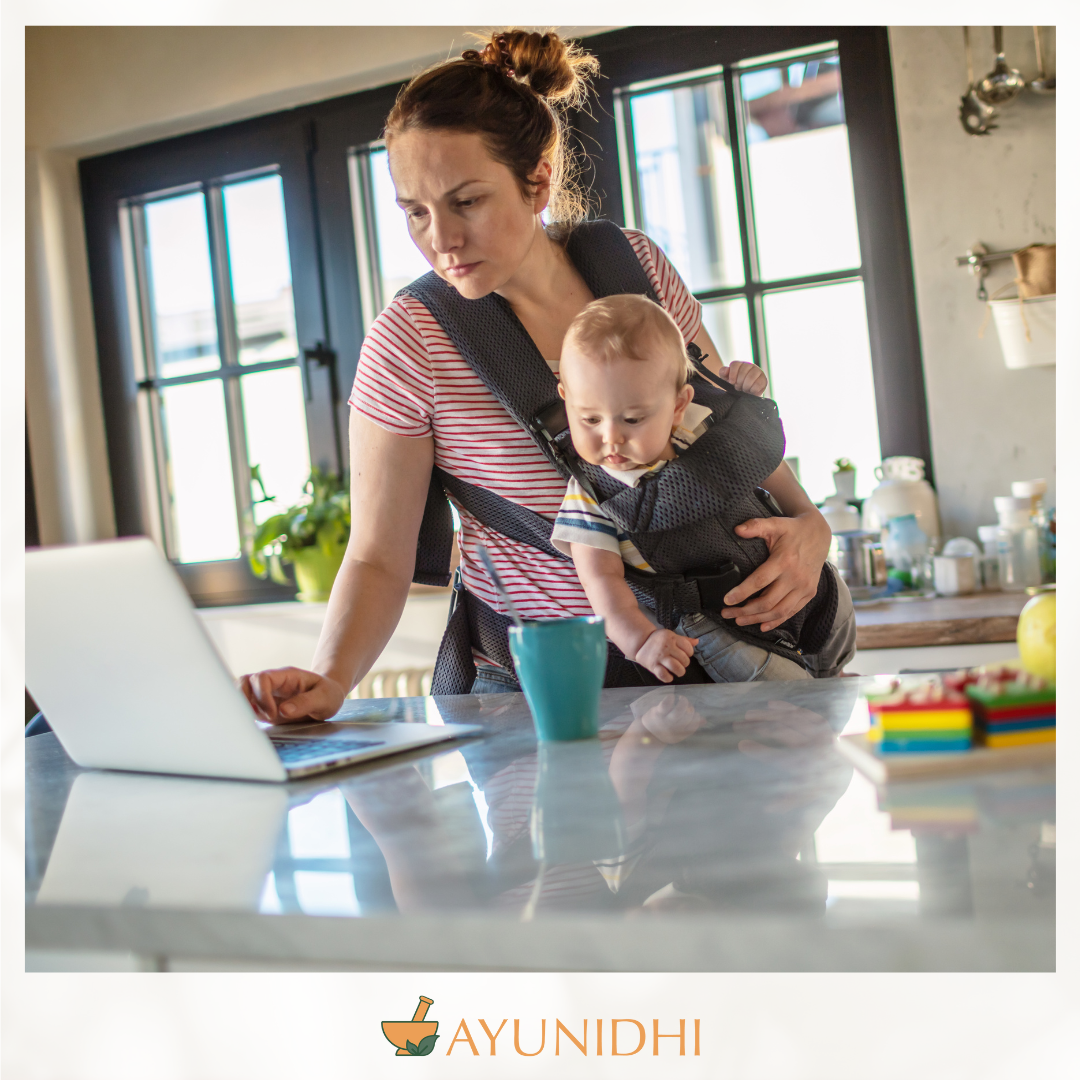
If you are a woman who constantly feels “too much and never enough” at the same time – overwhelmed by noise, messages, kids, tasks, yet somehow still behind – you are not alone. Many women live with undiagnosed or late-diagnosed ADHD. On the outside they look “high functioning”; inside they may feel scattered, anxious, emotionally raw, and exhausted from masking.
Research shows that ADHD in women is often overlooked because symptoms lean inward – emotional overwhelm, anxiety, overthinking, perfectionism – rather than the more stereotypical hyperactivity seen in boys. Emotional dysregulation, sensory overload, and executive function struggles (planning, prioritizing, task initiation) are now recognized as core challenges for adults with ADHD, not just side issues.
Ayurveda cannot “cure” ADHD, and it is not a replacement for diagnosis, medication, or therapy where those are appropriate. But Ayurveda does offer a deeply supportive framework for nervous system regulation, energy management, and daily rhythm – exactly where many women with ADHD feel most stuck.
ADHD in Women: What’s Really Going On?
The Invisible Load
Women and AFAB adults are more likely to present with inattentive or “internalized” ADHD – daydreaming, anxiety, rumination, people-pleasing – rather than overt hyperactivity. A 2023 narrative review on ADHD in women notes that they are frequently misdiagnosed with anxiety or mood disorders, and often receive an ADHD diagnosis years later, after significant burnout.
At the same time, a 2020 meta-analysis in BMC Psychiatry concluded that emotion dysregulation – intense, rapidly shifting feelings, difficulty recovering from small triggers – is a core feature of adult ADHD, with large effect sizes compared to neurotypical controls.
Layer in motherhood, caregiving, demanding careers, and cultural pressure to “keep it all together,” and it’s no wonder many women feel like their nervous systems are running in survival mode.
Common experiences for women with ADHD include:
- Chronic overwhelm, even with “small” tasks
- Sensory overload (noise, clutter, social media, crowded spaces)
- Difficulty starting tasks (even ones you care about)
- Time blindness and procrastination
- Emotional crashes after pushing through
- Shame and self-criticism (“Why can’t I just do this like everyone else?”)
Ayurveda doesn’t use the term “ADHD,” but it has a lot to say about vata aggravation, rajasic mind-states, and exhausted ojas that map beautifully onto this lived experience.
How Ayurveda Understands ADHD-like Patterns
Vata, Prana, and a Sensitive System
From an Ayurvedic perspective, the patterns many women with ADHD live with look like a vata-dominant imbalance:
- Too much movement (of thoughts, stimuli, tasks, information)
- Irregular routines – sleep, meals, work
- Dry, wired-tired energy that crashes easily
- Sensitivity to noise, light, emotional dynamics
Vata dosha (air + space) governs the nervous system, sensory input, and mental speed. When vata is high and ungrounded, the mind races, focus fragments, and the body can feel buzzy yet depleted. Over time, this drains ojas, the subtle “vital essence” that underpins resilience, immunity, and emotional stability.
In Ayurveda for ADHD in women, we are not trying to erase your sensitivity or your quick, creative mind. We are trying to contain and nourish it – so your gifts can express without burning you out.
Key Ayurvedic patterns often present in women with ADHD:
- High vata: racing thoughts, anxiety, insomnia, constipation, cold hands/feet
- Vata–pitta mix: mental overdrive, perfectionism, irritability, burnout
- Depleted ojas: frequent illness, fatigue, feeling “thin-skinned,” emotionally raw
Supporting this pattern is less about strict rules and more about creating gentle, repeatable rhythms that your nervous system can trust.
What the Research Says: Mind–Body Tools for ADHD
While there is limited research specifically on “Ayurveda for ADHD in women,” there is growing evidence that mind–body practices common in Ayurvedic and yogic care can support attention, emotional regulation, and stress resilience.
Mindfulness and meditation for ADHD
A 2020 systematic review in Mindfulness examined mindfulness-based interventions for ADHD and found that they produced small-to-moderate improvements in core ADHD symptoms, emotional regulation, and executive function in both adults and youth.
Another meta-analysis of meditation-based therapies in Evidence-Based Mental Health reported that meditation and related practices were associated with significant reductions in ADHD symptoms compared with control conditions, especially when programs were tailored and delivered over several weeks.
These approaches work, in part, by:
- Reducing sympathetic (fight-or-flight) activation
- Increasing parasympathetic (rest-and-digest) tone
- Improving sustained attention and impulse control
Exactly what so many women with ADHD are craving.
Herbal Support for Cognition, Stress, and Attention
Some Ayurvedic “medhya rasayana” herbs – brain- and nerve-tonics – have emerging evidence:
- Bacopa (Bacopa monnieri)
A randomized, double-blind, placebo-controlled study in adults found that standardized Bacopa extract improved working memory and attention and reduced anxiety over 12 weeks. - Ashwagandha (Withania somnifera)
A randomized controlled trial in adults with chronic stress showed that 60 days of ashwagandha root extract significantly reduced cortisol, anxiety, and perceived stress compared with placebo.
These herbs don’t treat ADHD directly, but they may support nervous system regulation, cognitive clarity, and stress resilience – valuable for women managing ADHD, overstimulation, and executive load. They should always be used thoughtfully and ideally with guidance, especially if you’re pregnant, breastfeeding, or taking medication.
Pillar One: Building a Gentle, Repeatable Daily Rhythm
For a vata-sensitive, ADHD-prone nervous system, rhythm is medicine. Ayurveda for ADHD in women starts with simple anchors, not perfection.
Three Daily Anchors
- Wake and wind down at roughly the same times
Even a 30–60 minute window helps. Early bedtime (around 10 p.m.) supports hormonal balance, mood, and next-day focus. - Regular meals (especially lunch)
Skipping meals or grazing all day destabilizes blood sugar and vata. Aim for:
- Warm breakfast (oatmeal with ghee, stewed apples, or savory leftovers)
- Solid lunch as your main meal
- Lighter, earlier dinner
- One mini-regulating practice per part of the day
- Morning: 3–5 minutes of breath or movement
- Midday: 1–2 minutes of pause before eating
- Evening: 5–10 minutes of restorative pose or self-massage
You can still live a full, complex life. These anchors simply give your nervous system predictable touchpoints of safety and regulation.
Pillar Two: Food for Focus, Not Perfection
Ayurveda treats digestion (agni) as the root of mental clarity and emotional steadiness. When agni is erratic, so is your energy and focus.
Simple Food Guidelines for a Sensitive Nervous System
- Favor warm, cooked meals over cold raw salads and smoothies, especially if you feel anxious, wired, or bloated.
- Use gentle spices – cumin, coriander, fennel, ginger – to support digestion without overheating.
- Include healthy fats (ghee, olive oil, avocado, soaked nuts) to nourish vata and stabilize energy.
- Limit “fake focus” from excess caffeine and sugar; they spike vata–pitta and worsen crashes.
Quick personalization:
- If you’re constantly wired, cold, and anxious: think grounding – stews, root vegetables, kitchari, warm milk with nutmeg.
- If you’re hot, driven, and irritable: think cooling – cucumber, mint, cilantro, coconut, bitter greens.
- If you’re heavy, foggy, and low-motivation: think lighter – sautéed greens, lentil soups, warming spices, earlier dinners.
You do not have to cook elaborate Ayurvedic recipes. Ayurveda for ADHD in women is about making your existing meals warmer, simpler, and more predictable.

Pillar Three: Regulating Overstimulation with Breath & Sensory Boundaries
ADHD in women often comes with sensory overload: sound, visual clutter, notifications, social demands. Ayurveda and yoga respond with two powerful tools: pranayama (breath) and pratyahara (wise sensory boundaries).
Two-Minute Nervous System Reset
Use this anytime – between meetings, in your car, before bedtime:
- Sit upright, feet on the ground.
- Inhale through the nose for a count of 4.
- Exhale through the nose for a count of 6–8.
- Repeat for 10–20 breaths.
Longer exhalations gently activate the parasympathetic system, lowering heart rate and reducing reactivity. Over time, your system becomes less “hair-trigger” and more able to pause before reacting – crucial for emotional regulation.
Alternate Nostril Breathing (Nadi Shodhana)
Ideal before tasks that require focus:
- Inhale left nostril, exhale right; inhale right, exhale left – slow and smooth.
As the mindfulness and pranayama literature shows, these practices improve autonomic balance and perceived stress, both of which indirectly support attention and executive function.
Sensory Pratyahara In Real Life
Pratyahara doesn’t mean living in a cave; it means choosing your inputs. Try:
- One screen-light hour before bed: no scrolling, only calming input.
- Noise boundaries: earplugs, noise-canceling headphones, or soft instrumental music while working.
- Visual simplification: one clear workspace (even a tray you can clear off each morning).
These small choices dramatically reduce background “noise” that drains ADHD-sensitive brains.
Pillar Four: Yoga Micro-Practices for Executive Function
You do not need 90 minutes of yoga to benefit. For ADHD, short, consistent, targeted practices often work better than long sessions you never get to.
A Five-Minute “Focus” Sequence
Use before work, study, or planning:
- Cat–Cow (Marjaryasana–Bitilasana) – 1 minute
Synchronize movement with breath to connect mind and body. - Standing Forward Fold (Uttanasana) – 60–90 seconds
Slight bend in knees; let head hang. This calms the mind and resets overstimulation. - Chair Pose (Utkatasana) with arms forward – 30–45 seconds
A small dose of activation to bring energy into your legs and core – helpful for task initiation. - Seated stillness + 10 rounds of extended exhale breathing
You’ll likely feel more present, grounded, and ready to choose a single next step.
A Five-Minute “Downshift” Sequence
Use when emotional overwhelm or shutdown hits:
- Child’s Pose (Balasana) – 1–2 minutes
Forehead supported on a block or pillow for deep pressure on the nervous system. - Reclined Bound Angle (Supta Baddha Konasana) – 2–3 minutes
Supports pelvic floor and softens jaw, belly, and chest. - Hands-over-heart breathing – 10–20 slow breaths
The goal is not to “fix” the feeling, but to give your body a physiological experience of safety, so your mind has a chance to follow.
Pillar Five: Ayurvedic Herbs and Supports (Used Wisely)
Herbs can be beautiful allies, but they are not a standalone treatment for ADHD. They work best as part of a broader plan that may include medication, therapy, coaching, and lifestyle changes.
Commonly used Ayurvedic supports include:
- Ashwagandha – Adaptogen that helps reduce stress and cortisol, with trials showing improvements in anxiety and perceived stress.
- Brahmi / Bacopa monnieri – Medhya herb used traditionally for memory, focus, and learning. Human trials suggest benefits for working memory and attention, along with reduced anxiety.
- Tulsi (Holy Basil) – Supports stress resilience and may gently modulate immune and inflammatory pathways.
- Gotu Kola (Centella asiatica) – Used for cognitive support, circulation, and “cooling” an overactive mind.
Important safety notes:
Herbs work best when combined with rhythm, food, breath, and boundaries.
Always consult a qualified practitioner if you are pregnant, breastfeeding, on stimulants, antidepressants, or other medications.
Start low, go slow, and track how you feel – mentally, physically, and sleep-wise.
Working With ADHD Diagnosis, Not Against It
Ayurveda for ADHD in women is meant to support, not replace, conventional care. If you suspect ADHD, consider:
- Seeking a formal assessment from a licensed provider
- Exploring therapies such as CBT, coaching, or skills-based support
- Discussing possible medication options if appropriate
Ayurveda then becomes your daily scaffolding:
- Helping you sleep more deeply
- Stabilizing your energy and mood
- Reducing the intensity of sensory and emotional overload
- Making it easier to follow through on what your therapist or coach recommends
That integrative approach – modern diagnosis plus ancient regulation tools – is where many women find the most relief.
Conclusion: Reframing ADHD as Sensitivity That Deserves Support
When we view ADHD only as a “disorder,” it is easy to slip into shame and self-blame. Ayurveda invites a different lens: you are a sensitive, fast-processing, deeply responsive being whose system needs more grounding, more nourishment, and more rhythm – not more judgment.
Ayurveda for ADHD in women is not about fixing who you are. It is about creating a life that honors the way your brain and nervous system actually work:
- Clear anchors in your day so you are not fighting chaos alone
- Warm, stabilizing food so your focus and mood have something to stand on
- Breath and yoga practices that give you real-time access to calm
- Herbs that gently support cognition and stress resilience when appropriate
- Boundaries around sensory and digital overwhelm so you can hear yourself again
Over time, these small, compassionate practices add up. Overwhelm becomes more manageable. Freeze shifts into pause, then choice. Your energy feels less jagged and more steady. You can show up for your work, your relationships, and your own desires with more clarity and less self-punishment.
If you see yourself in this, I encourage you to take one next step – not ten.
- Choose a simple morning or evening rhythm.
- Try two minutes of extended exhale breathing today.
- Or reach out for personalized support.
At AyuNidhi, I work with women navigating ADHD, overstimulation, and executive function challenges using individualized Ayurvedic lifestyle plans, AyurYoga, and nervous system–focused self-care.
If you’re ready to explore how Ayurveda for ADHD in women can support your nervous system and daily life, you can book a first-time Ayurvedic consultation or AyurYoga session and begin building a kinder rhythm that truly fits you.