


Life can feel like a constant juggling act for busy moms and working professionals. Stress creeps in and leaves us tense, drained and overwhelmed. If you’re looking for a nurturing way to find peace amid the chaos, yoga for stress relief may become your best friend. Yoga is more than exercise: it’s a mind-body practice that calms the nervous system and quiets a racing mind. Left unchecked, chronic stress can take a toll on your health and daily life, making it harder to focus, sleep and stay patient. That’s why healthy stress relief is essential, not a luxury. In this post, we’ll explore how yoga eases stress and share simple poses that fit a packed schedule. Whether you’re juggling meetings or managing a household, even a few minutes of yoga can help you find your calm.
The Science Behind Yoga for Stress Relief
How does yoga reduce stress? The secret is the mind-body connection it builds. Under stress, your body shifts into “fight or flight”: stress hormones like cortisol rise, your heart races and your muscles tense. Yoga gently guides you into the opposite state, “rest and digest,” through mindful movement and breathing.
Research suggests yoga can trigger the body’s relaxation response. Studies have found that practicing yoga may lower cortisol and help ease heart rate and blood pressure, sending your system clear signals to relax (source). In essence, yoga activates the parasympathetic nervous system, the part of us that tells us to calm down and let go.
Breathing is a big part of this. Under stress, breath becomes fast and shallow. Yoga encourages slow, deep breathing, which helps release physical tension. It’s like telling your body, “You’re safe; you can relax now.” Over time, yoga helps your body bounce back from daily stress more quickly.
Yoga also builds mindfulness. Busy people often have racing thoughts about tasks and responsibilities. Yoga acts like a reset button by anchoring your attention in the present moment: how your body feels and how your breath moves. Instead of getting swept up in worry, you learn to notice anxious thoughts and let them pass. (Learn how to match your yoga practice to your dosha.)
These effects add up to real improvements in well-being. Research reviews suggest yoga can ease feelings of stress and anxiety and support emotional well-being. By calming your mind and easing strain on your body, yoga helps you meet daily stress with more resilience.
Benefits of Yoga for Stress Relief
Here are some key benefits of yoga for stress relief, with what research suggests:
- Mindfulness and coping: yoga is a moving meditation. Focusing on breath and body builds mindfulness that carries into everyday life: you notice stress sooner and handle it more calmly. Instead of reacting to a trigger right away, you might pause, breathe and respond with a cooler head.
- A calmer stress response: studies suggest yoga may lower cortisol and ease heart rate and blood pressure, shifting you out of “fight or flight” and into a calmer state (source).
- Better mood: many people feel happier and calmer after yoga, and research supports this. In a workplace yoga trial, participants reported significantly less stress, sadness and anxiety, and felt more confident and serene (source). Over time, a regular practice can support a more positive outlook.
- Less muscle tension: stress often shows up as tight shoulders, a stiff neck or an aching back. Yoga gently stretches and strengthens the muscles, helping release that tension. Even a short session can ease physical strain from sitting or standing all day.
Best Yoga Poses for Stress Relief
Which poses work best when you’re stressed and short on time? Here are a few simple, soothing poses you can do even on a tight schedule. Practice just one or two whenever you need a quick reset:
1. Child’s Pose (Balasana): a gentle resting pose that calms quickly. Kneel, sit back on your heels and fold forward, stretching your arms out in front of you. Rest your forehead on the mat or a cushion. Your back and shoulders get a gentle stretch while your head and heart relax downward. Breathe slowly and feel tension melt from your neck and lower back. Even 30 seconds here can help you feel more centered.
2. Cat-Cow (Marjaryasana/Bitilasana): a simple flowing stretch to release back tension and connect with your breath. Start on all fours in a tabletop position. Inhale as you drop your belly and gently arch your back (Cow), then exhale as you round your spine and tuck your chin (Cat). Continue for several breaths. Cat-Cow loosens a stiff back and encourages rhythmic breathing, which naturally eases stress. You can do a seated version at your desk by arching and rounding your back in your chair.
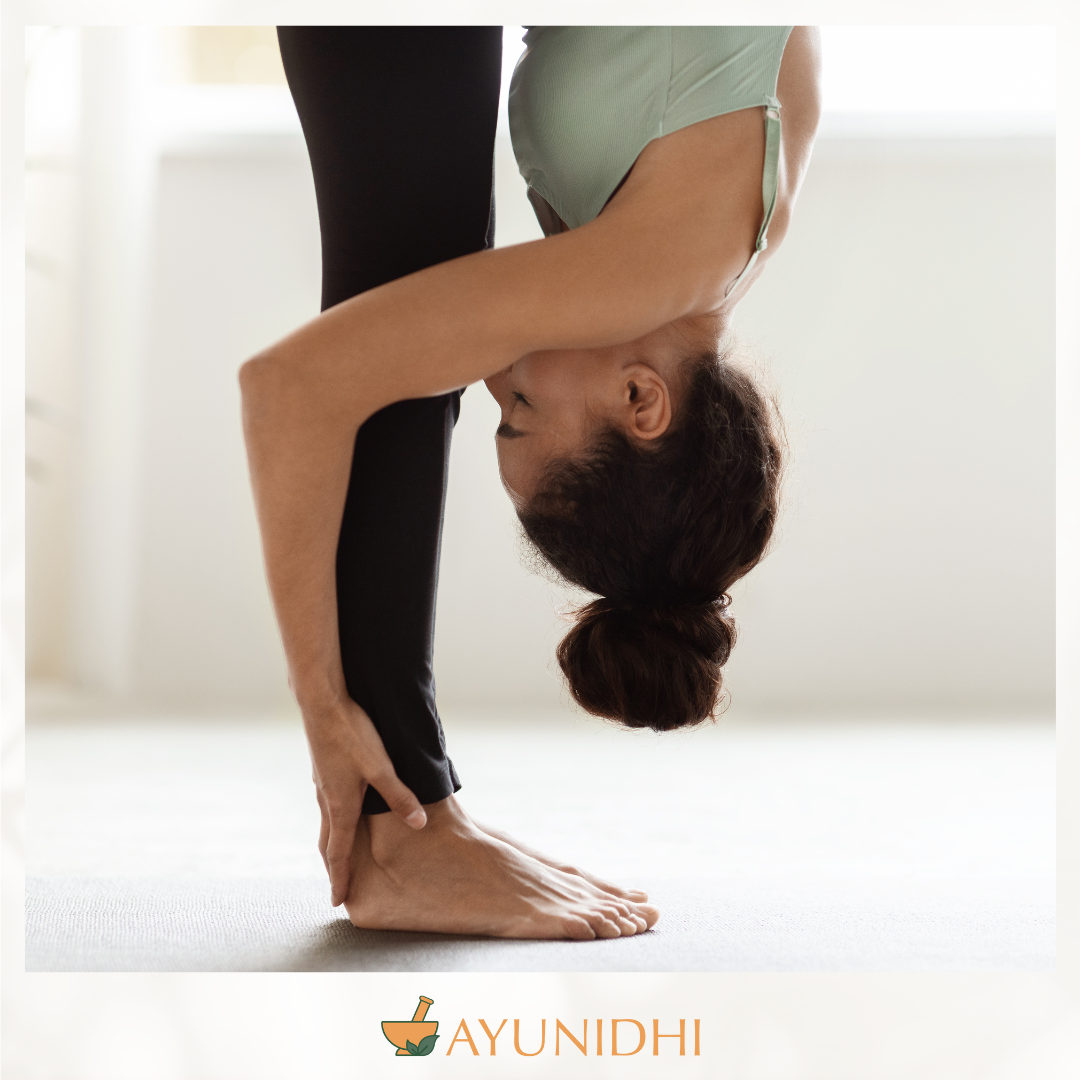
3. Standing Forward Bend (Uttanasana): a pose to “let go.” Stand, exhale and hinge at the hips to fold forward, letting your upper body hang. Bend your knees as much as you need, and let your head and arms relax down. You’ll feel a gentle stretch along your spine and the backs of your legs. This calming fold soothes the nervous system. Stay for a few slow breaths, and imagine stress draining from your shoulders with each exhale. Come up slowly, and skip deep folds if you have uncontrolled high blood pressure, glaucoma, a recent back injury, or are in later pregnancy.
4. Legs-Up-the-Wall (Viparita Karani): a wonderfully restorative pose for quieting the mind. Scoot up to a wall, lie on your back and rest your legs up the wall. Let your arms fall out to the sides, close your eyes and breathe naturally. Gravity does the work, and your body gets the message to relax. It’s a mini vacation for your nervous system. Even 5 minutes can leave you refreshed. If you’re pregnant, during your period, or have glaucoma or uncontrolled high blood pressure, ask your teacher about a modified version.
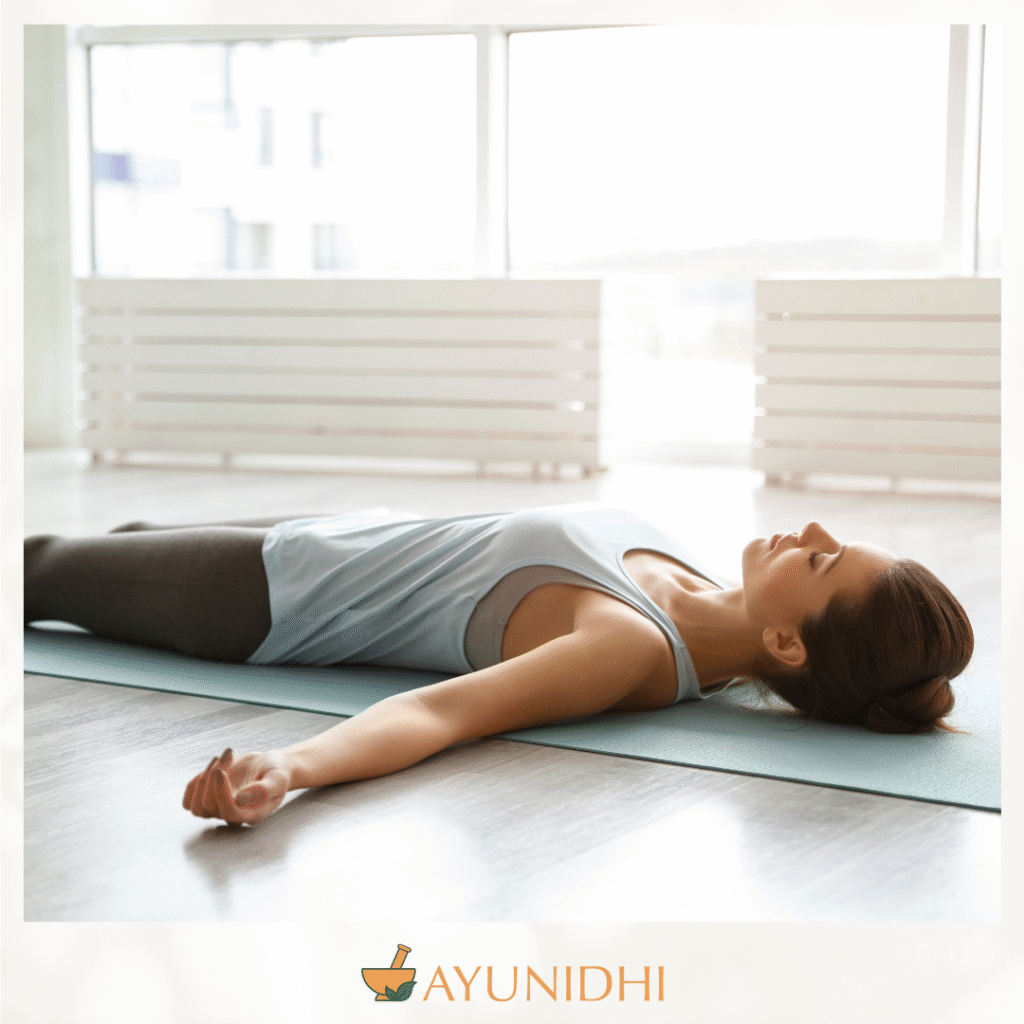
5. Corpse Pose (Savasana): the ultimate relaxation pose. Lie on your back on a comfortable surface, such as a mat, a rug or even your bed. Let your arms rest slightly away from your sides, palms up, and let your whole body grow heavy and soft. In Savasana, you’re not trying to do anything; you’re practicing complete surrender. It helps the benefits of your practice sink in and fully calms the mind. Rest here for a couple of minutes, simply breathing. When you rise, you’ll likely feel more grounded and at peace.
Each of these poses releases stress in its own way. Use pillows or rolled blankets for extra support, and don’t worry about doing them “perfectly.” The goal is to relax your body and quiet your mind. On a really busy day, a quick Child’s Pose and a few deep breaths is enough. On days with more time, string a few poses together. Listen to your body, and do what feels right.
Tips for Fitting Yoga into a Busy Schedule
Making time for yoga can be challenging when you’re busy, but it’s doable. Here are some practical tips:
- Start small: even 5 or 10 minutes makes a difference. Try a short session in the morning or a couple of gentle poses before bed. A little every day keeps stress from building up.
- Schedule it: treat your yoga break like an important appointment. Block out 10 minutes after lunch or a wind-down session in the evening; if it’s on your calendar, you’re more likely to do it.
- Use your environment: at work, do a few stretches at your desk or in a private room. At home, roll out your mat in the living room, and your kids might join in. Keeping a mat or cushion in sight reminds you to pause.
- Breathe anytime: you don’t need a pose to practice yogic breathing. When stress hits, in traffic, in a long line or before a meeting, take a few slow breaths: inhale for 4 counts and exhale for 6 or 8. These calming breaths activate your relaxation response anywhere, anytime.
- Listen to your body: some days you’ll have more energy than others. If you’re very tired, choose a restful pose like Legs-Up-the-Wall or Child’s Pose. If you’re restless, try a few rounds of Cat-Cow or a brisk walk followed by a forward bend. Any amount of yoga that fits your day is worthwhile.
Weaving bits of yoga through your week can make stress feel more manageable. Those small pauses to breathe and stretch keep tension from accumulating. Over time, you may notice you respond to stress differently, pausing to breathe when a challenge comes up instead of feeling overwhelmed right away. That’s the real power of yoga in a busy life: it doesn’t remove all stress, but it helps you meet it with more clarity and calm.
Finding Calm in the Chaos
When you’re juggling work and family, it’s easy to put your own well-being last, but caring for yourself is essential. Yoga offers a nurturing, personal way to relieve stress that fits even the busiest schedule. Through simple poses and mindful breaths, it helps you center yourself, calm your mind and recharge your body.
Research supports what many practitioners feel: studies suggest yoga can help ease stress, support mood and emotional health, and strengthen coping skills (source). It’s reassuring that something as simple as stretching on your living room floor or taking a short breathing break at your desk can make such a positive difference.
Whether you’re a mom who barely has a minute to herself or a busy professional, even a few minutes of yoga is a step toward a calmer you. The next time stress starts to build, give yourself permission to pause and breathe. Roll out a mat, or use the space beside your desk, for a gentle stretch or a moment of quiet. Think of it as hitting the reset button on your day.
Here’s to finding a bit of calm amid the chaos, one pose at a time.
I offer Ayurvedic yoga one-on-one, in person in Encinitas or virtually, tailored to your constitution, your schedule and your stress, alongside your medical care. Book a free discovery call to see if it’s the right fit.