


Most of us think about immunity only when we catch a cold, fight the flu or worry about the season ahead. Western medicine often describes immunity as a battle: pathogens invade, defenses mobilize, and the body fights back. Ayurveda adds a complementary lens: immunity is not only about fighting but about thriving.
In Ayurveda, strong immunity comes from balance: balanced digestion, balanced doshas and a balanced mind. When these foundations are steady, the body is better able to resist and recover. Alongside the care your doctor provides, Ayurveda emphasizes year-round cultivation of resilience through daily routines, seasonal adjustments, nourishing foods and rejuvenating herbs.
That is the essence of Ayurvedic immune support: building ojas (vital essence), clearing ama (toxic residue), kindling agni (digestive fire) and harmonizing the doshas. In this post, we’ll explore Ayurvedic wisdom, connect it with modern research, and share practical ways to support your immunity naturally, every day of the year.
Immunity in Ayurveda: Vyadhikshamatva and Ojas
The Classical Concept of Vyadhikshamatva
The Charaka Samhita, one of Ayurveda’s foundational texts, describes immunity as vyadhikshamatva: the body’s ability to resist disease and recover from illness. It is not a single system, like “the immune system” in Western biology, but the integrated strength of digestion, tissues and mind.
Two qualities define immunity in Ayurveda:
- Vyadhi-pratibandhakatva: resistance to the onset of disease
- Vyadhi-bala-virodhitva: the ability to withstand disease once it occurs
Both depend on the strength of ojas, the subtle essence that governs vitality, mental stability and immunity.
Ojas: The Reservoir of Resilience
Ojas is the pure essence distilled from well-digested food, nourished tissues and a balanced lifestyle. It is described as “the container of life,” giving glow to the skin, steadiness to the mind and resistance to disease. When ojas is depleted, the body becomes more vulnerable, the mind more anxious, and illness more frequent.
Ojas is weakened by:
- Poor digestion (weak agni, excess ama)
- Chronic stress or lack of rest
- Overwork and exhaustion
- Excessive sexual activity
- Processed, nutrient-poor foods
- Emotional disturbances like worry, anger or grief
Ayurvedic immune support focuses on protecting and rebuilding ojas through nourishing foods, rasayana herbs, restful routines and mental balance.
Agni and Ama: The Roots of Immune Strength
Ayurveda sees digestion as central to health. When agni is strong, food is transformed into energy and tissue. When it is weak, food becomes ama, a residue that clogs the channels and lowers immunity.
The Four States of Agni
- Sama agni (balanced fire): food is digested efficiently, and immunity is strong.
- Manda agni (weak fire): slow metabolism, heaviness, congestion.
- Tikshna agni (sharp fire): overactive digestion, acidity, inflammation.
- Vishama agni (irregular fire): unpredictable appetite, bloating, constipation.
Ama: The Silent Saboteur
In Ayurveda, ama is sticky, heavy and toxic. It circulates through the body, blocking channels and lowering immunity.
Signs of ama include:
- Coated tongue
- Bad breath and fatigue
- Heaviness after meals
- Frequent colds
- Brain fog
- Sluggish elimination
By strengthening agni and clearing ama, we protect ojas and support immune resilience.
Modern Science & the Immune Connection
Modern research is exploring connections that echo these Ayurvedic insights:
- Gut-immune axis: A large share of the body’s immune cells live in and around the gut. Imbalanced gut bacteria (dysbiosis) are linked to allergies, autoimmunity and weaker defenses. Ayurveda’s emphasis on digestion echoes this modern finding.
- Stress and immunity: Chronic stress raises cortisol, which can suppress immune defense. A 2020 review in Frontiers in Immunology describes how stress can disrupt immune balance and resilience (source).
- Ayurvedic herbs and immunity: Ashwagandha has been studied mainly for stress (source). Since chronic stress can weaken immune defenses, this is one reason it’s traditionally used as an immune ally.
The parallels are clear: immunity is not just about “fighting germs.” It depends on the terrain of the body, shaped by digestion, stress and lifestyle.
Ayurvedic Immune Support: Food as Medicine
Foods That Build Ojas
- Warm milk with turmeric or saffron: nourishing and grounding
- Ghee: supports digestion, lubricates tissues, builds ojas
- Soaked almonds and dates: energy-rich, sattvic nourishment
- Mung dal (green gram): light, easy to digest, protein-rich
- Seasonal fruits: fresh, local, and organic where possible
Foods That Weaken Immunity
- Excess sugar and processed snacks
- Fried and heavy foods
- Leftovers and refrigerated meals
- Excess alcohol and caffeine
- Ice-cold drinks that dampen agni
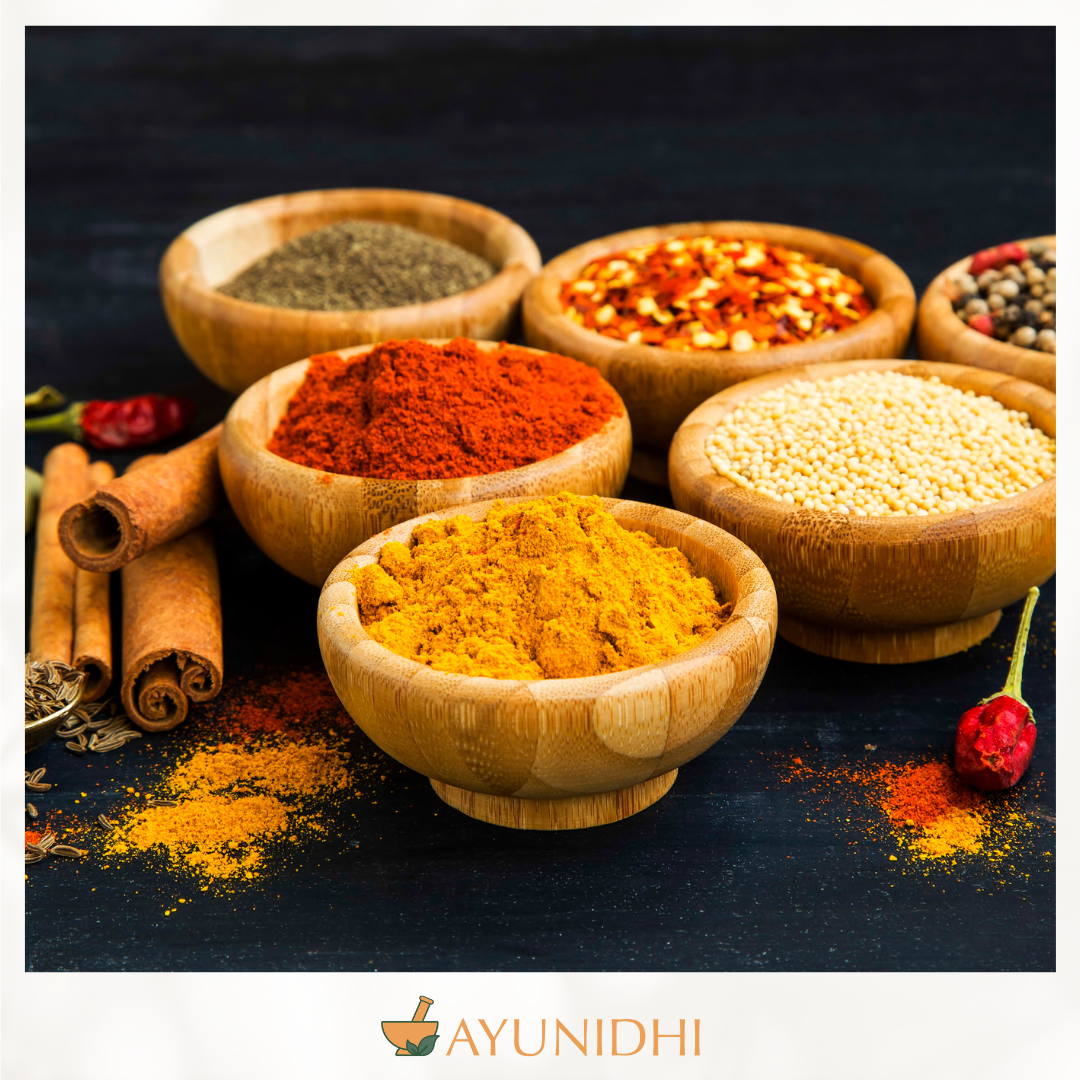
Digestive Spices
Using these spices every day supports agni and immunity:
- Ginger: reduces ama and clears the channels
- Cumin: stimulates digestion
- Coriander: cooling, and calms Pitta heat
- Turmeric: studied for its antioxidant and anti-inflammatory properties
- Black pepper: improves absorption of nutrients
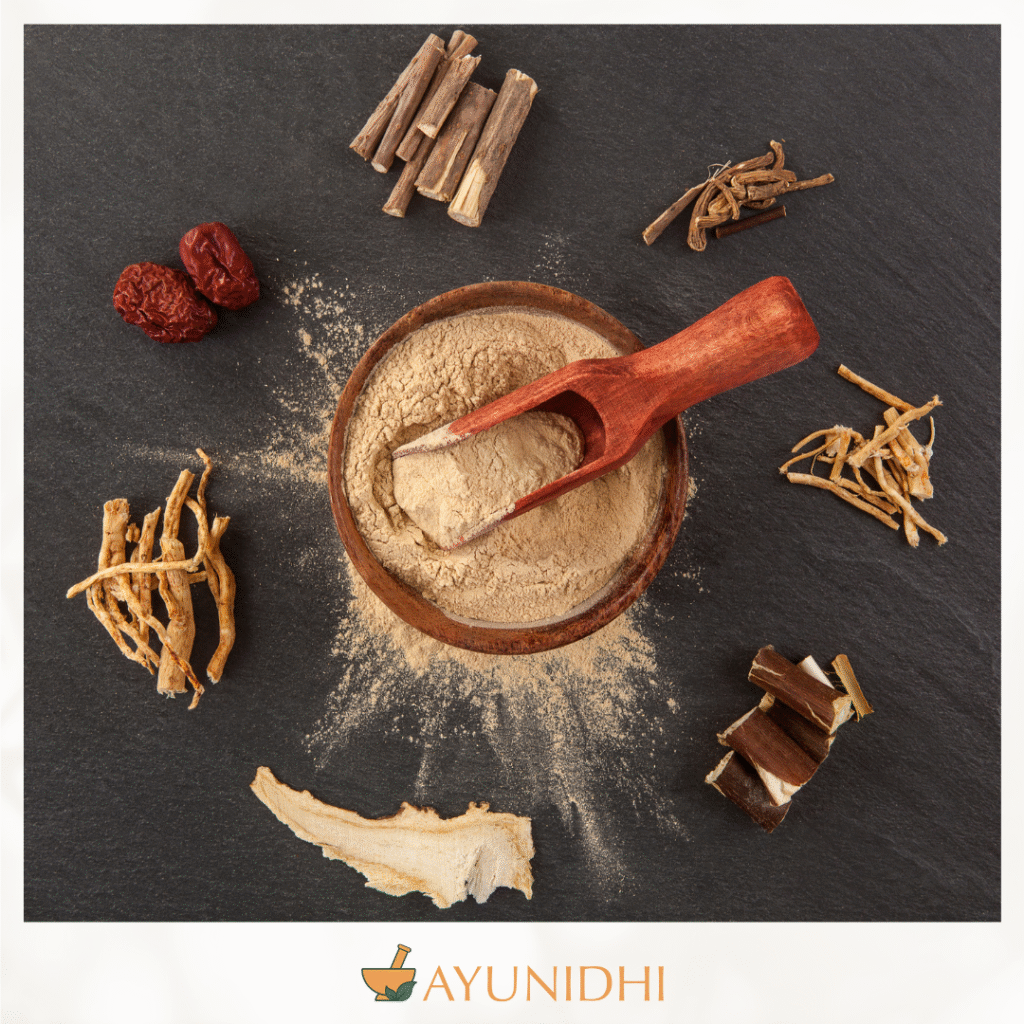
Rasayana Herbs: Ayurveda’s Immune Allies
Ayurveda identifies rasayana (rejuvenating) herbs that strengthen ojas and immunity. They are the cornerstone of Ayurvedic immune support.
Ashwagandha (Withania somnifera)
- Adaptogen traditionally used to ease stress and support a healthy stress response
- Traditionally used to strengthen resilience and immunity
- Early research suggests it may support immune function; more human studies are needed
Tulsi (Holy Basil)
- Antioxidant; studied in the lab for antimicrobial properties
- Supports respiratory health and eases Kapha congestion
- Traditionally used to calm stress
Guduchi (Tinospora cordifolia)
- Known as Amrita, the “nectar of immortality”
- Traditionally used to support immunity and recovery
- Use only under practitioner guidance: it is immune-stimulating, and there are reports of liver injury, so it’s not for everyone, especially with autoimmune conditions
Amalaki (Indian Gooseberry)
- A rich natural source of vitamin C
- Rejuvenates tissues and protects against oxidative stress
- Main ingredient in Chyawanprash
Triphala
- A blend of amalaki, haritaki and bibhitaki
- Supports gut health and regular elimination
- Early research is exploring its effects on gut bacteria
Chyawanprash
- A classical herbal jam made with amalaki, herbs, ghee and honey
- Traditionally used to build ojas, strengthen the lungs and support seasonal immunity
Before you add herbs: Check with your doctor first if you’re pregnant or breastfeeding, have an autoimmune condition, take immune-suppressing, blood-thinning or diabetes medication, or have had an organ transplant. Chyawanprash contains sugar and honey, so keep that in mind if you’re watching blood sugar. The right herbs depend on your constitution, which is why I personalize them.
Pranayama & Yoga for Immune Support
Yoga Postures for Immunity
- Twists (Ardha Matsyendrasana): support digestion
- Bridge Pose (Setu Bandhasana): opens the chest and supports circulation
- Fish Pose (Matsyasana): opens the chest and supports the lungs
- Child’s Pose (Balasana): restores calm to the nervous system
Pranayama Practices
- Nadi Shodhana (alternate nostril breathing): balances the doshas and eases anxiety
- Kapalabhati: an energizing breath. Skip it if you’re pregnant or have high blood pressure, a heart condition or recent abdominal surgery.
- Bhramari (bee breath): calms the mind
A review in the Journal of Ayurveda and Integrative Medicine highlights how yogic breathing may support stress resilience (source).
Seasonal Immune Support (Ritucharya)
Ayurveda adjusts immune practices to the seasons:
- Spring (Kapha): light, spiced foods; ginger tea; gentle cleansing practices
- Summer (Pitta): cooling foods like cucumber and coconut water; avoid excess heat; practice sheetali pranayama
- Autumn (Vata): warm, oily foods; abhyanga self-massage; restorative yoga
- Winter (Vata/Kapha): strengthening soups, nuts and warming spices; energizing yoga
Living with the seasons helps your body adapt as the environment changes.
Conclusion: Year-Round Ayurvedic Immune Support
Immunity isn’t built overnight. It’s cultivated through daily habits, seasonal alignment and mindful living. Ayurveda teaches that true immune strength comes from ojas, agni and doshic balance.
By eating nourishing foods, kindling digestion, practicing daily self-care, using herbs wisely under guidance, and adjusting your routine with the seasons, you build resilience that lasts.
Modern research on the gut, stress and immunity is increasingly exploring the connections Ayurveda has long described.
Living in harmony with these principles helps you build year-round vitality and resilience, alongside the care your doctor provides.
I work one-on-one with women, in person in Encinitas or virtually, to build a personalized plan of food, routine and, where appropriate, herbs, matched to their constitution and alongside their medical care. Book a free discovery call to see if it’s the right fit.